There’s a certain magic to the idea of a perfect winter day. Crisp air, the quiet crunch of snow underfoot, and the exhilarating rush of sledding down a pristine, untouched hill. Most of us cherish these memories, but let's be honest, reality often involves wet socks, lugging a heavy sled back uphill, and that one patch of hidden ice that sends you spinning.
What if you could capture the pure, unfiltered thrill of that descent, amplify it by a thousand, and experience it anytime, anywhere? That's the rabbit hole I recently fell down, and its name is snow rider. This isn't just another game; it's a digital meditation on speed, focus, and the beautiful chaos of a never-ending winter landscape. It strips away everything but the core essentials: you, your sled, and an infinite expanse of snow and obstacles. It’s a game that’s deceptively simple to start but surprisingly deep to master.
The First Descent: Understanding the Flow
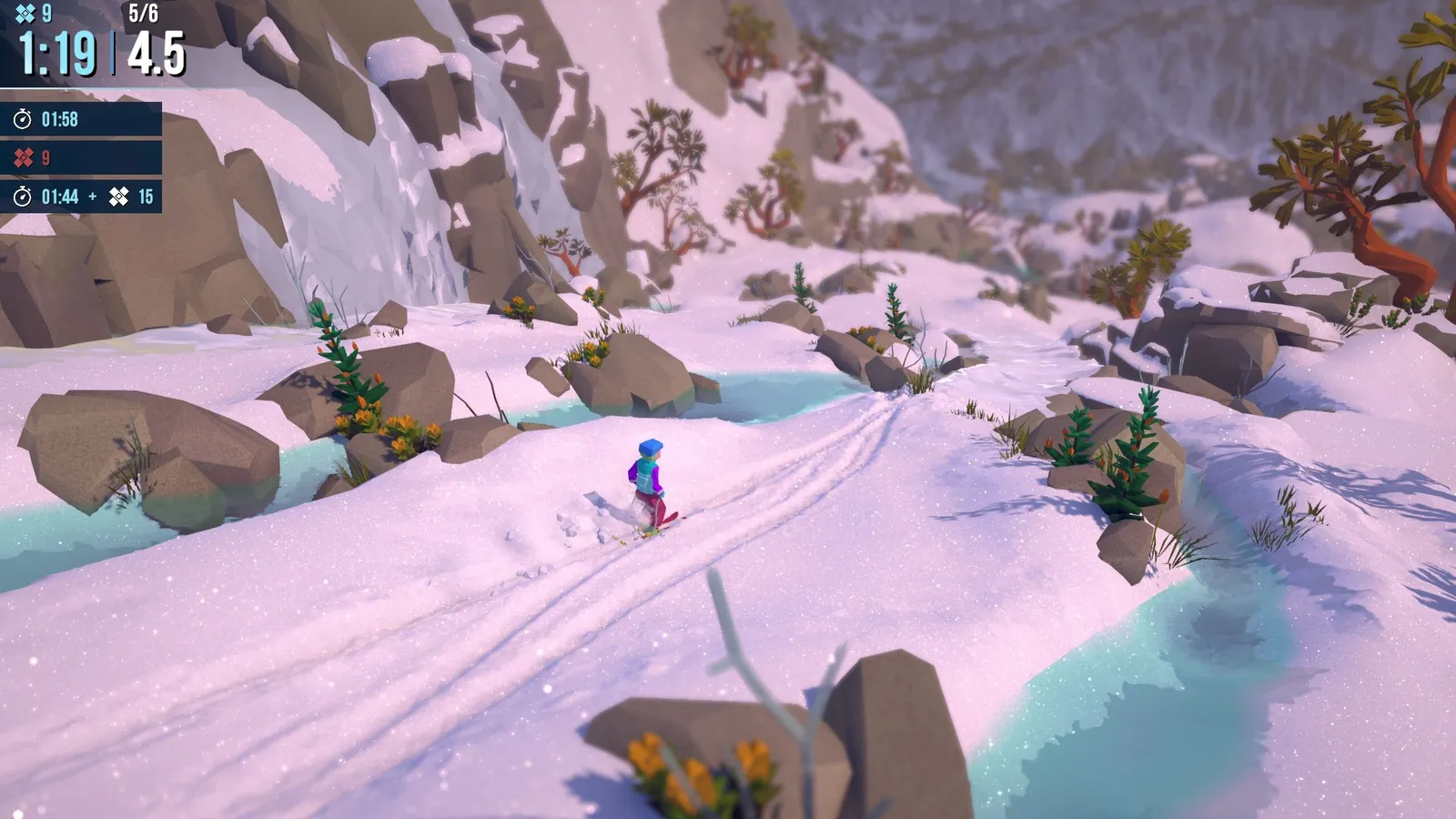
When you first load up the game, you're met with a minimalist, clean aesthetic. There are no complicated tutorials or lengthy cutscenes. There's just your little character on a sled, poised at the top of an endless, procedurally generated hill. The moment you press a key, you're off.
The controls are beautifully intuitive. You only need the left and right arrow keys (or 'A' and 'D') to steer. That's it. The goal is equally straightforward: slide as far as you can without crashing. The challenge comes from the obstacles that litter the mountainside. You’ll start with a sparse scattering of pine trees and boulders. As you gain confidence and your score climbs, the density and variety of these obstacles increase dramatically. Giant snowmen will pop up, imposing rock formations will create narrow channels, and dense forests will demand split-second reactions.
The physics feel just right. Your sled has a sense of weight and momentum. A slight tap on the key results in a gentle drift, while holding it down sends you into a sharp, carving turn. You quickly learn that your path isn’t about jerky, last-second dodges. It's about finding a rhythm, a "flow." You start looking ahead, not just at the immediate threat, but two or three obstacles down the line, planning a smooth, serpentine path through the chaos. This is where the game transitions from a simple reaction test to a genuine art form.
Beyond Survival: Tips for Mastering the Mountain
Surviving your first few runs is one thing, but chasing a high score and truly mastering the slopes is another. After countless crashes (and a few triumphant runs), I've picked up on some subtle strategies that can make all the difference.
1. Look Ahead, Not Down: This is the golden rule. It's incredibly tempting to fixate on the obstacle directly in front of you. Don't. Your peripheral vision can handle the immediate threat. Your conscious focus should be scanning 10 to 20 meters ahead, identifying upcoming patterns. Are the trees forming a corridor on the left? Is there a wide-open space after that cluster of snowmen? Planning your route in advance allows for smoother, more efficient movements and conserves your mental energy for when things get truly hectic.
2. The "Feathering" Technique: Instead of holding down the arrow keys for sharp turns, try tapping them lightly. I call this "feathering." This allows for micro-adjustments that keep you on a stable path without over-steering. A hard turn can throw off your momentum and line you up poorly for the next obstacle. Feathering keeps you in control, making your sled feel like an extension of your thoughts.
3. Embrace the Center (When Possible): While it feels safer to hug the edges of a cluster of obstacles, staying relatively centered on the screen gives you more options. If you're pinned to one side and a surprise obstacle appears, you have nowhere to go. By staying near the middle, you give yourself a 50/50 chance to dodge left or right, effectively doubling your escape routes.
4. It's a Marathon, Not a Sprint: The game's speed increases gradually. Don't try to be a hero in the first 100 meters. Use the slower early stages to get into your rhythm. Find your flow state. When the speed and obstacle density ramp up, you'll be operating on instinct rather than panicked reaction. The goal isn't just to dodge the next tree; it's to sustain your run for as long as possible.
5. The Gift Shop is Your Friend: The game features an in-game currency – gifts – that you collect during your runs. These aren't just for show. You can use them to purchase different sleds. Some of these are purely cosmetic, but others might feel slightly different, perhaps affecting your turning radius or visual profile. Experimenting with a new sled can sometimes be the mental refresh you need to break through a scoring plateau.
The Endless Winter and the Pursuit of Perfection
What makes a game like this so compelling? It's the purity of the experience. There are no lives, no complex power-ups, no story to follow. It's a singular, focused challenge: you against the mountain. Each run is a fresh attempt at perfection, a new chance to beat your own best score.
It taps into that same fundamental joy we felt as kids, aiming our toboggan just right to miss the big oak tree and glide for a few extra feet. Snow Rider is the digital embodiment of that feeling—a simple, elegant, and endlessly replayable quest for the perfect run. It’s a wonderful reminder that sometimes, the most engaging experiences are the ones that strip everything away, leaving only pure, unadulterated gameplay. So go ahead, grab your virtual sled, and see how far the endless winter will take you. Just remember to look ahead.



Share this page with your family and friends.